©

Date
Aug 2023
Client
Pet Circle
Industry
E-commerce / Pet Care
Timeline
6 Months
The Challenge
Customers churned after 2 deliveries. The UI looked fine.
Pet Circle's auto delivery customers had higher lifetime value than any other segment — their retention was directly tied to near-term revenue and reduced acquisition spend. But most customers cancelled after just two repeat deliveries. Customer feedback painted a clear picture of frustration: "I don't know when my next delivery is coming." "I don't know when I'll be charged." "I don't know how to change the frequency." "Impossible to add to existing auto delivery! I shall now make another separate order. This happens every time! No time to contact customer service agent yet again!" A heuristic evaluation against Amazon, Woolworths, Coles, and Budget Pet Products revealed that customers already had established patterns for managing repeat deliveries from other platforms. Pet Circle's model broke those expectations entirely.
Product onboarding flow
Mapping The Lifecycle
A misaligned mental model was the core issue.
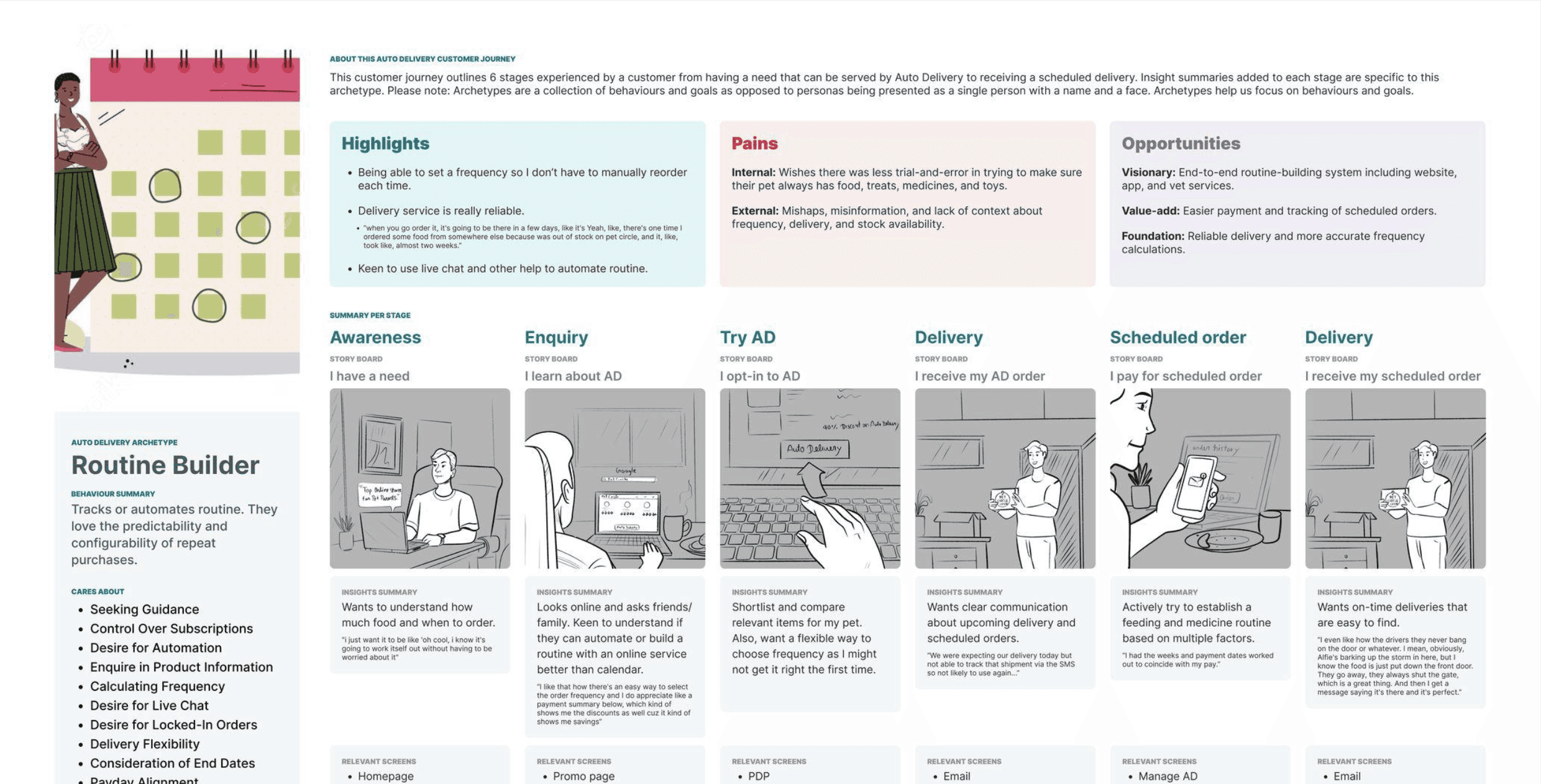
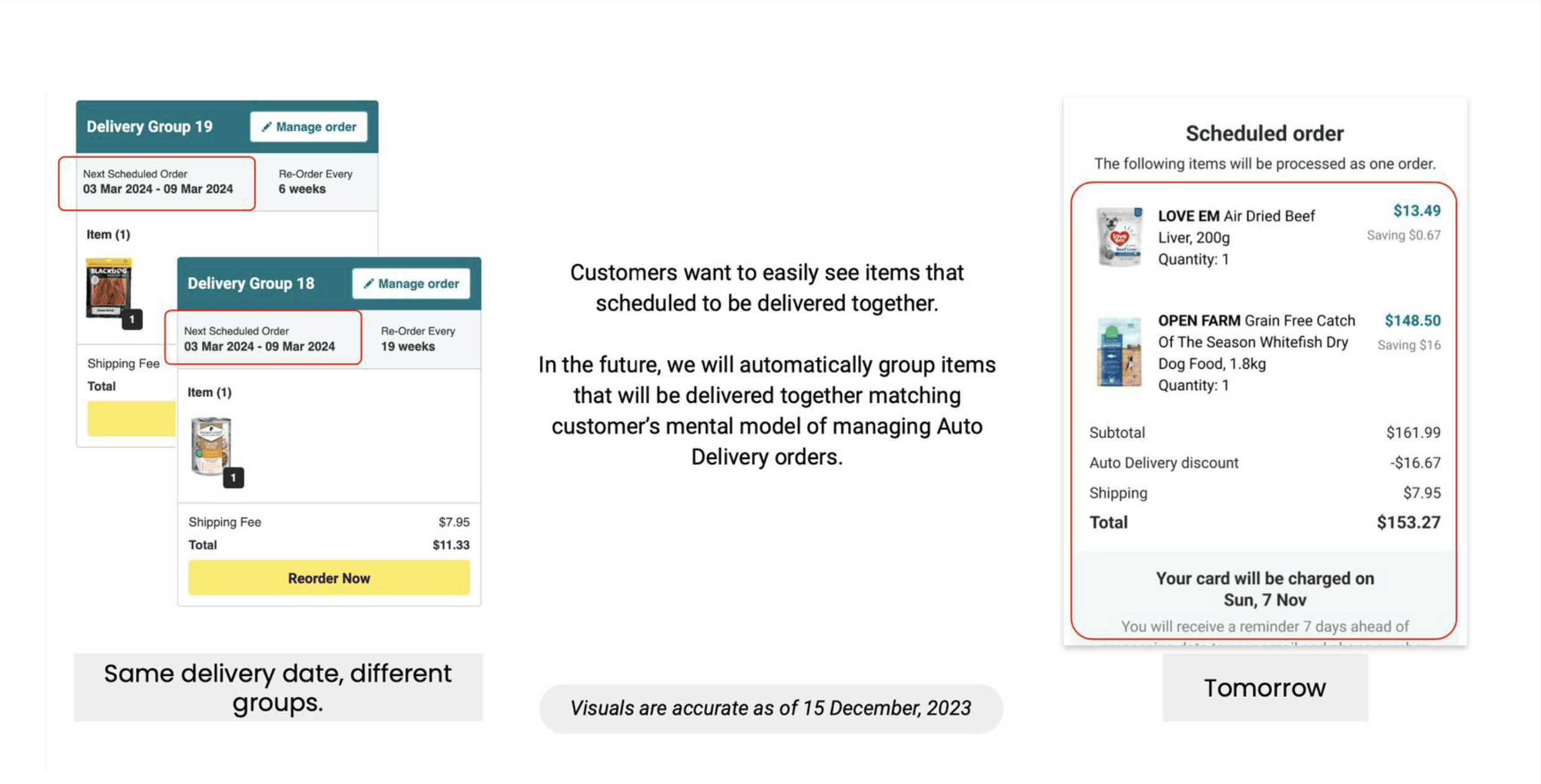
Before redesigning any screens, I mapped the full repeat delivery lifecycle: from a customer's first auto delivery signup through to their third scheduled order. The service blueprint tracked both what customers experienced and what happened in the warehouse. The gap was fundamental: customers thought of each delivery as a single order, "what's arriving this week, and can I change it?" The platform treated deliveries as subscription instances grouped by frequency. Items with the same delivery date appeared in separate "Delivery Groups" with different numbers. This mismatch meant customers couldn't find their items, couldn't understand when they'd be charged, and couldn't change what was coming without contacting support. Through customer interviews I identified two behaviour archetypes: 1. Routine Builders: automate their pet's feeding schedule. Care about predictability and frequency control. Want it to just work. 2. Savvy Savers: subscribe for discounts and stock priority. Care about flexibility and value. Manage deliveries actively. Both groups shared the same core frustration: the platform didn't match how they thought about their orders.
The Solution
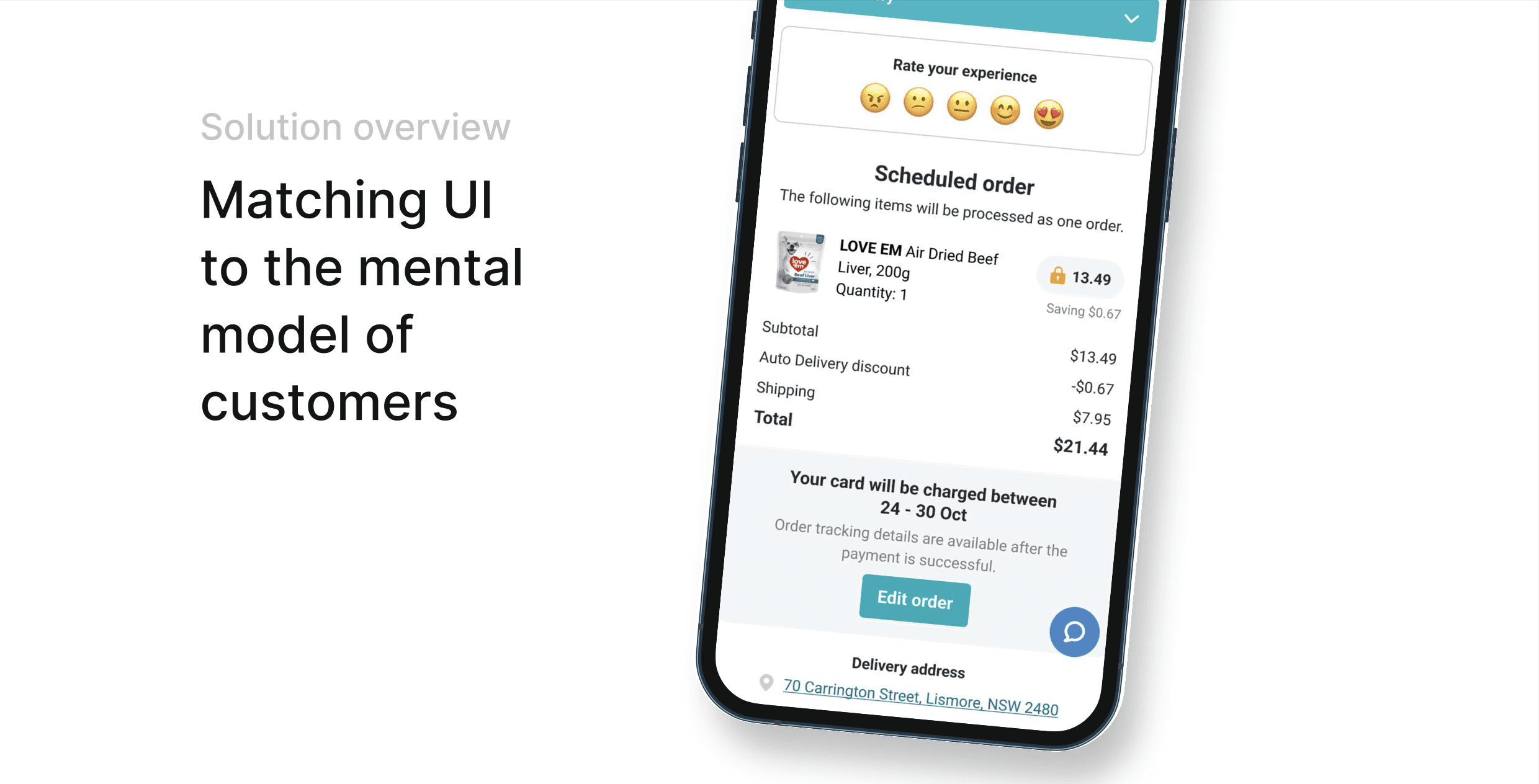
Match the mental model first. Integrate deeper later.
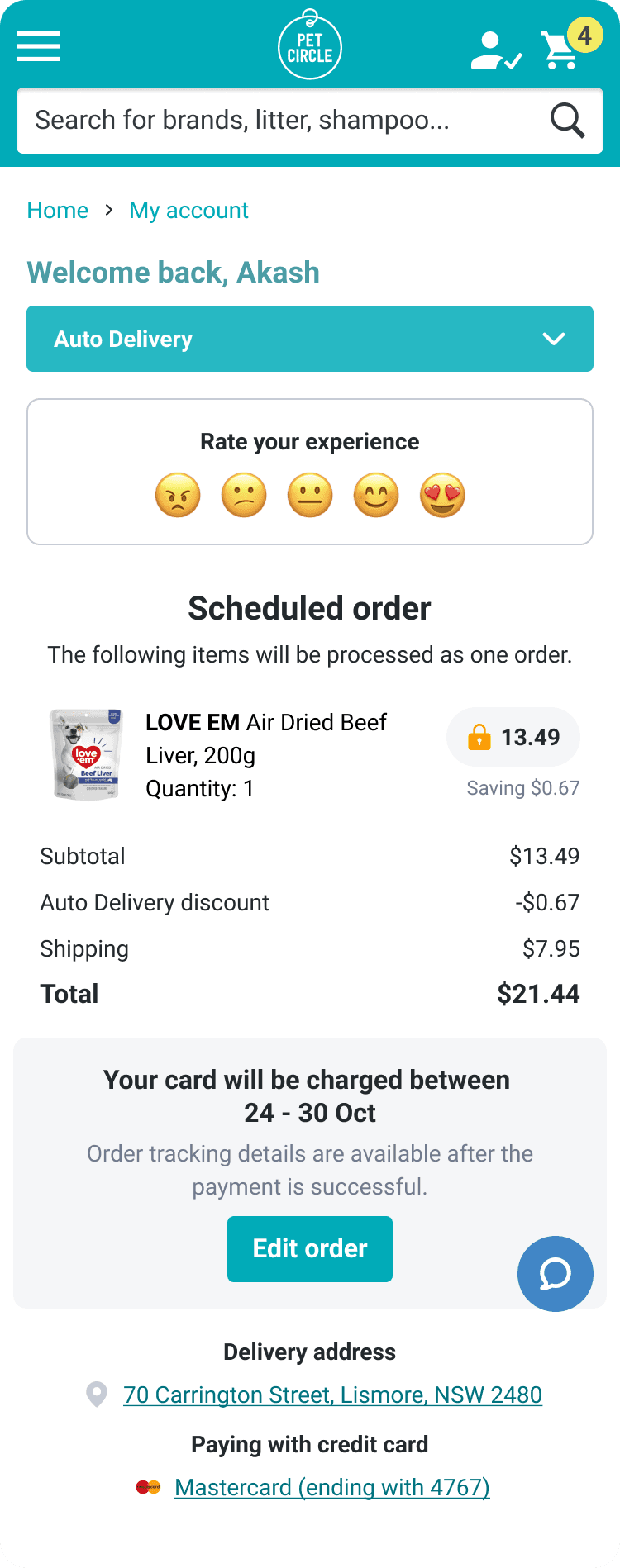
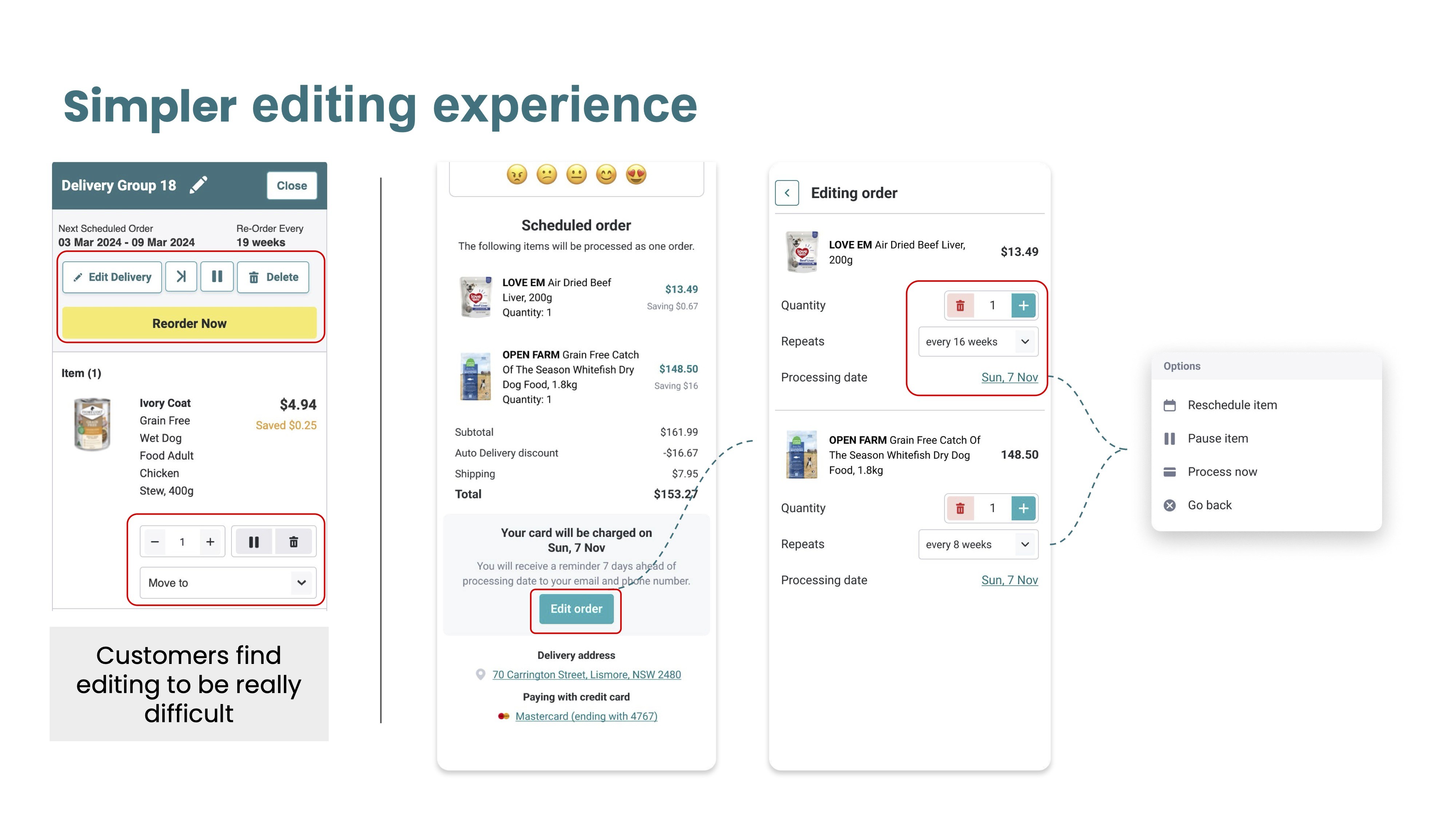
Engineering capacity was limited: we couldn't rebuild the delivery system in one release. So we aligned on a staggered approach to match the customer's mental model first, then integrate repeat deliveries into the broader shopping experience. Three design principles guided the work: 1. Match mental model: show items grouped by delivery date, not by subscription instance. One delivery date = one view. 2. Improve visibility: surface charge dates, delivery windows, and edit options upfront. No more guessing when you'll be charged. 3. Reduce duplicates: the product detail page now recognises existing auto delivery items and surfaces a "Manage order" path instead of letting customers accidentally create duplicate subscriptions. The editing experience was rebuilt from a cramped card with tiny controls into a dedicated view where each item has clear options: reschedule, pause, process now, or remove.
By the numbers
More projects