©

Date
Apr 2022
Client
Safety Culture
Industry
Enterprise Operations SaaS
Timeline
4 Months
Solution
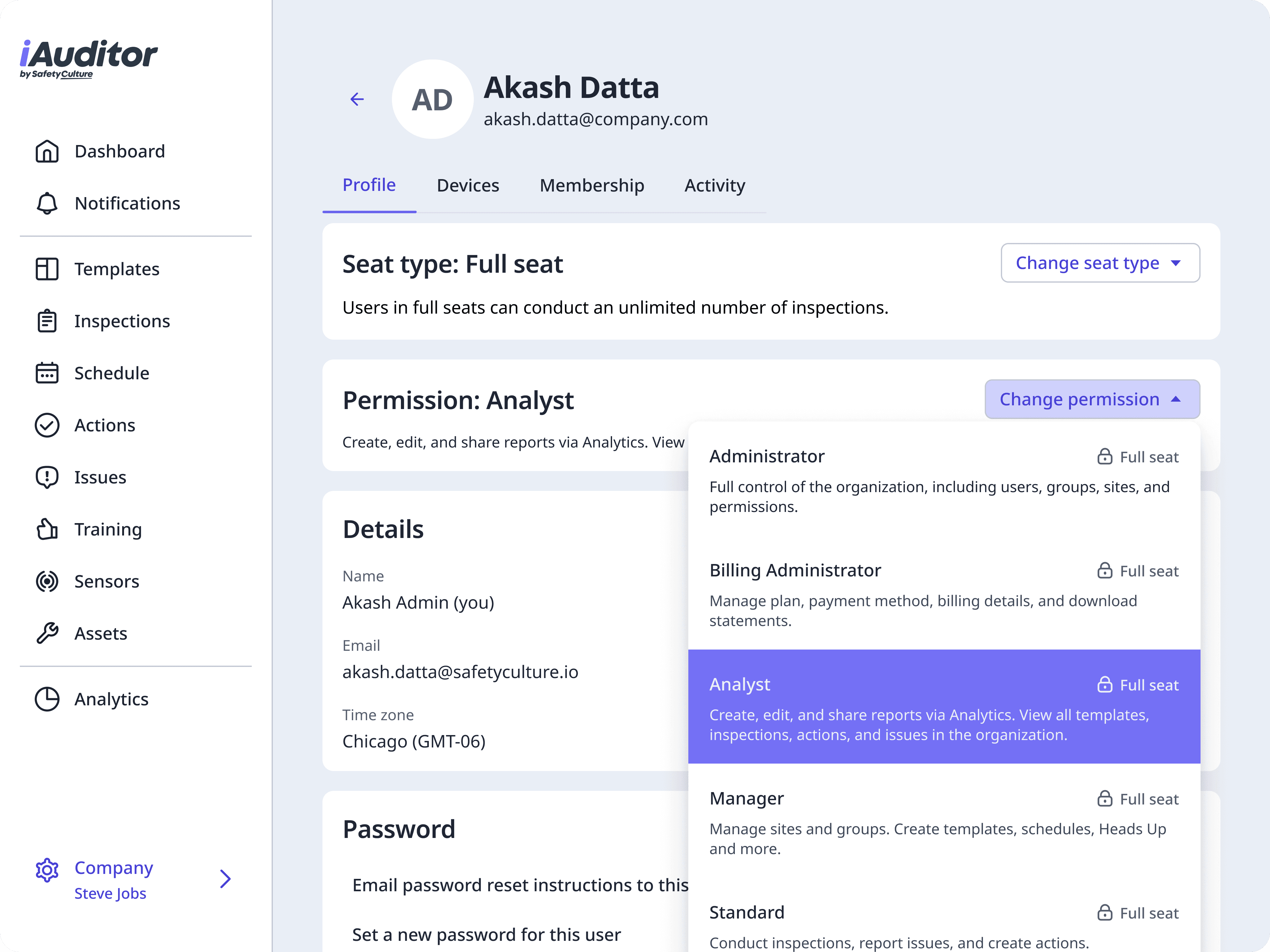
Grouped Permissions
The Challenge
4 enterprise clients churned. The problem wasn't the UI.
SafetyCulture's platform was losing its largest customers — organisations onboarding 100+ users every fortnight. Managers at IKEA, AusPost, and Transport for London couldn't self-serve user setup. Staff on shared tablets couldn't access the right checklists fast enough to stay compliant. And the bulk user add flow — the single biggest task for new enterprise customers — had the highest drop-offs in the first 30 days. The company treated this as a settings screen problem. But the real gaps were invisible at the UI level. "We upload 100+ users every fortnight but still manage roles manually across tools." — AusPost Regional Manager "If file access isn't immediate, floor staff can't stay compliant." — IKEA Manager
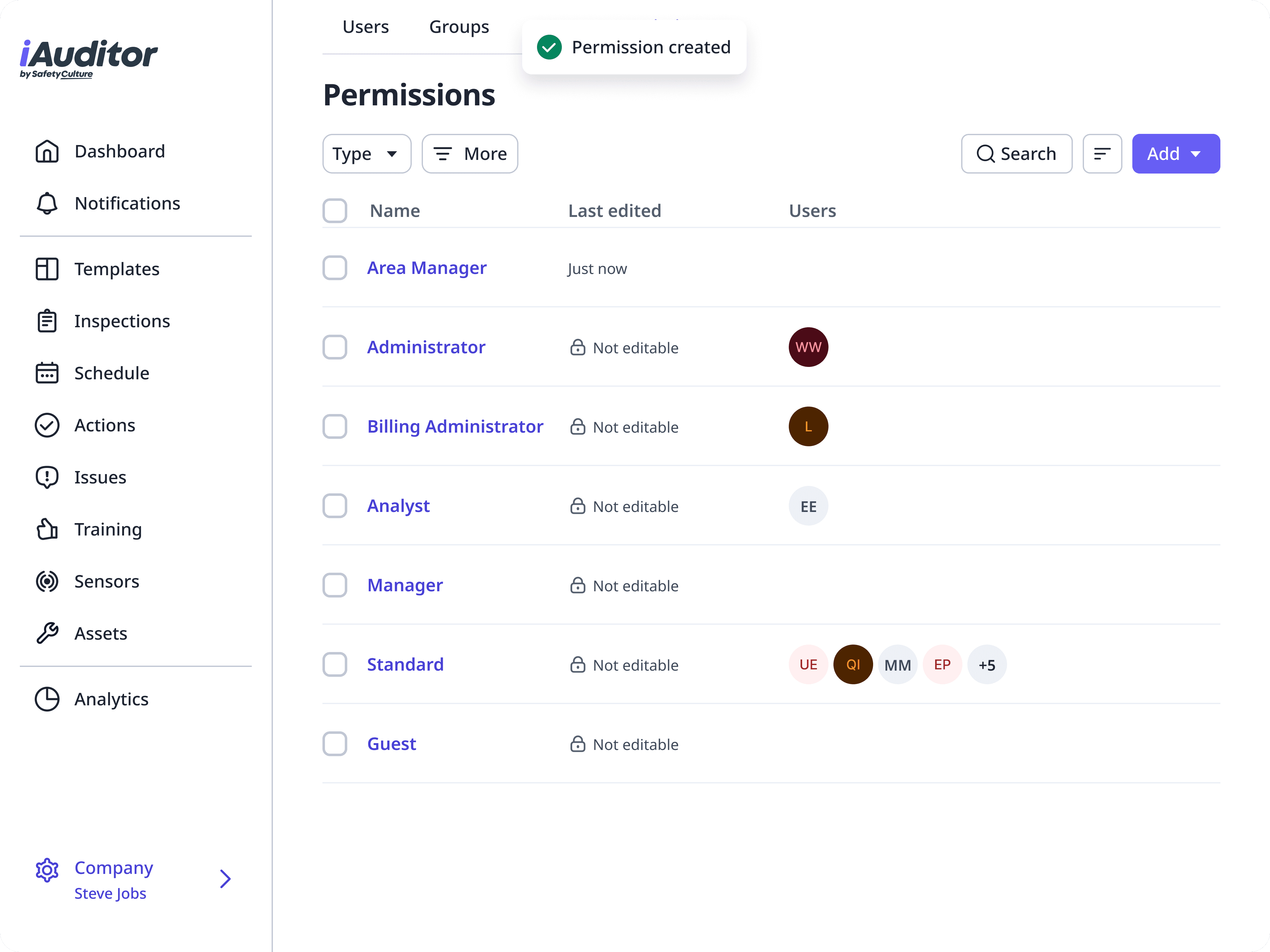
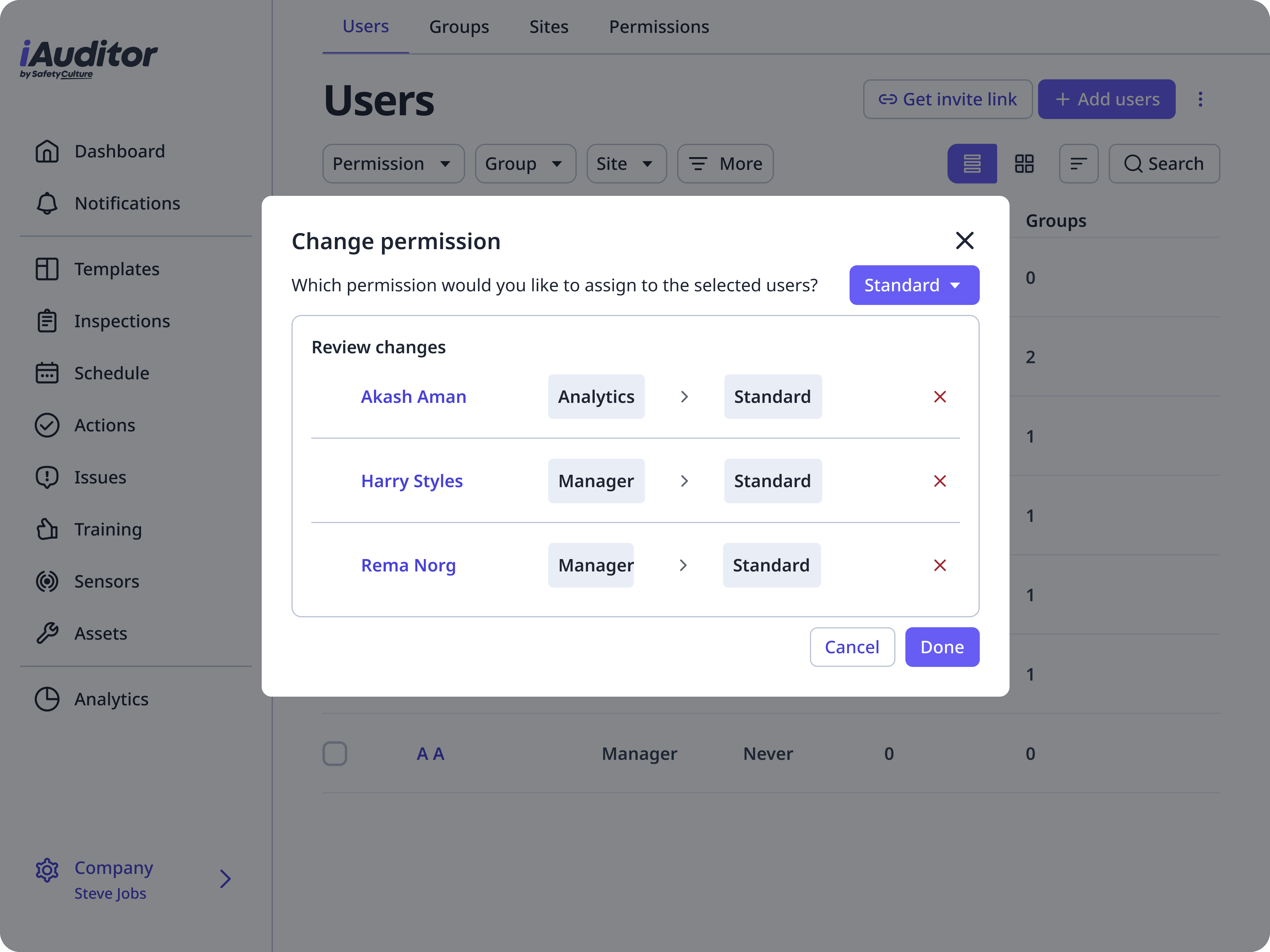
Bulk Change Permissions
Mapping The Lifecyle
The gaps were in the handoffs, not the interface.
Before designing anything, I mapped the full onboarding journey — from the moment an enterprise deal closed through to a frontline worker completing their first task. The service blueprint revealed three operational seams where the experience collapsed: Between sales and onboarding — no structured process for translating an organisation's team structure into platform roles. Between onboarding and first use — managers had to manually provision users across SafetyCulture and external identity tools like Okta, doubling the work. Between setup and compliance — if a floor worker couldn't access the right checklist immediately, the entire point of the platform failed. This reframed the project. We weren't redesigning a settings screen. We were fixing the operational handoffs that made enterprise onboarding collapse under scale.
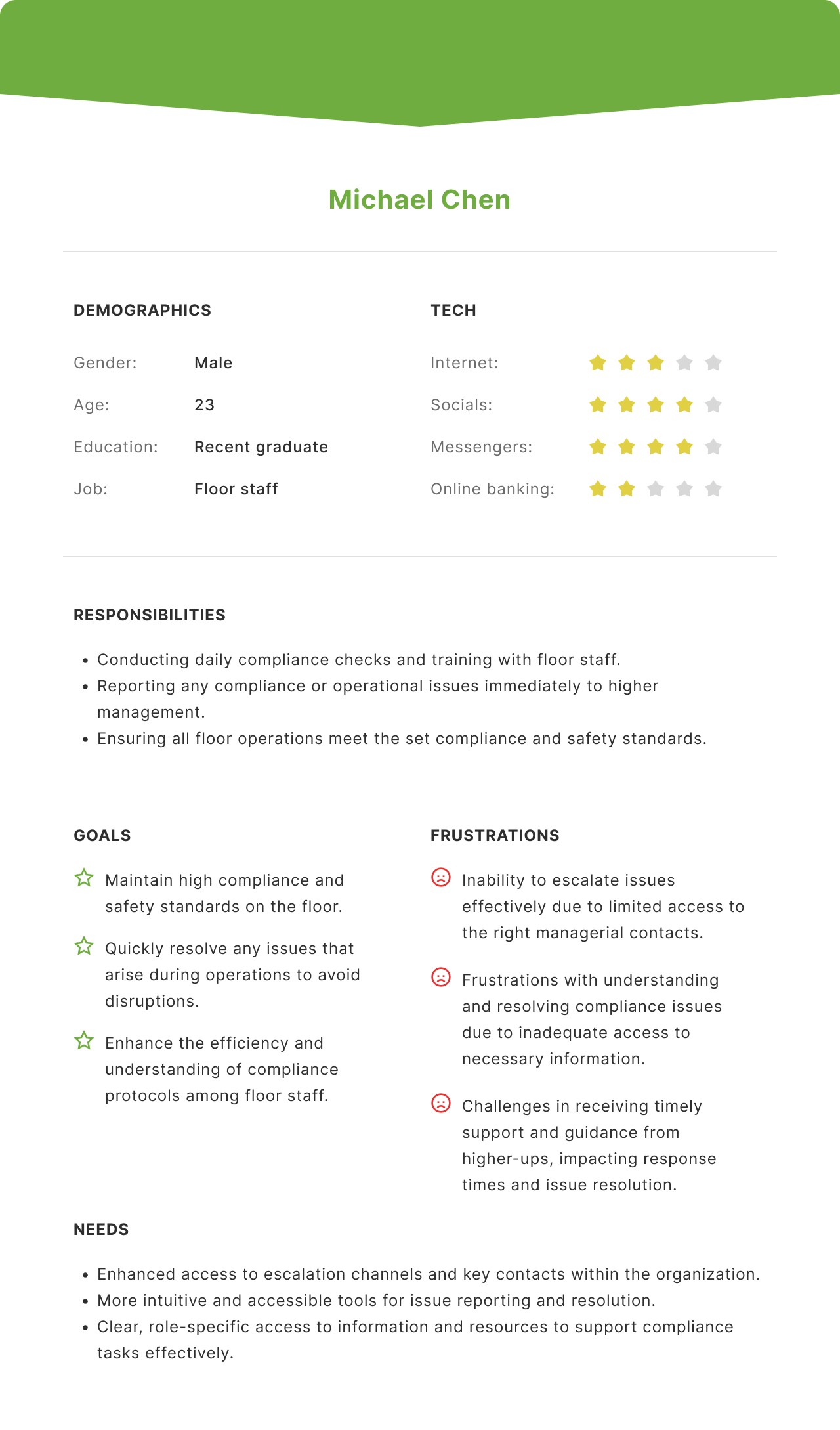
Persona 1
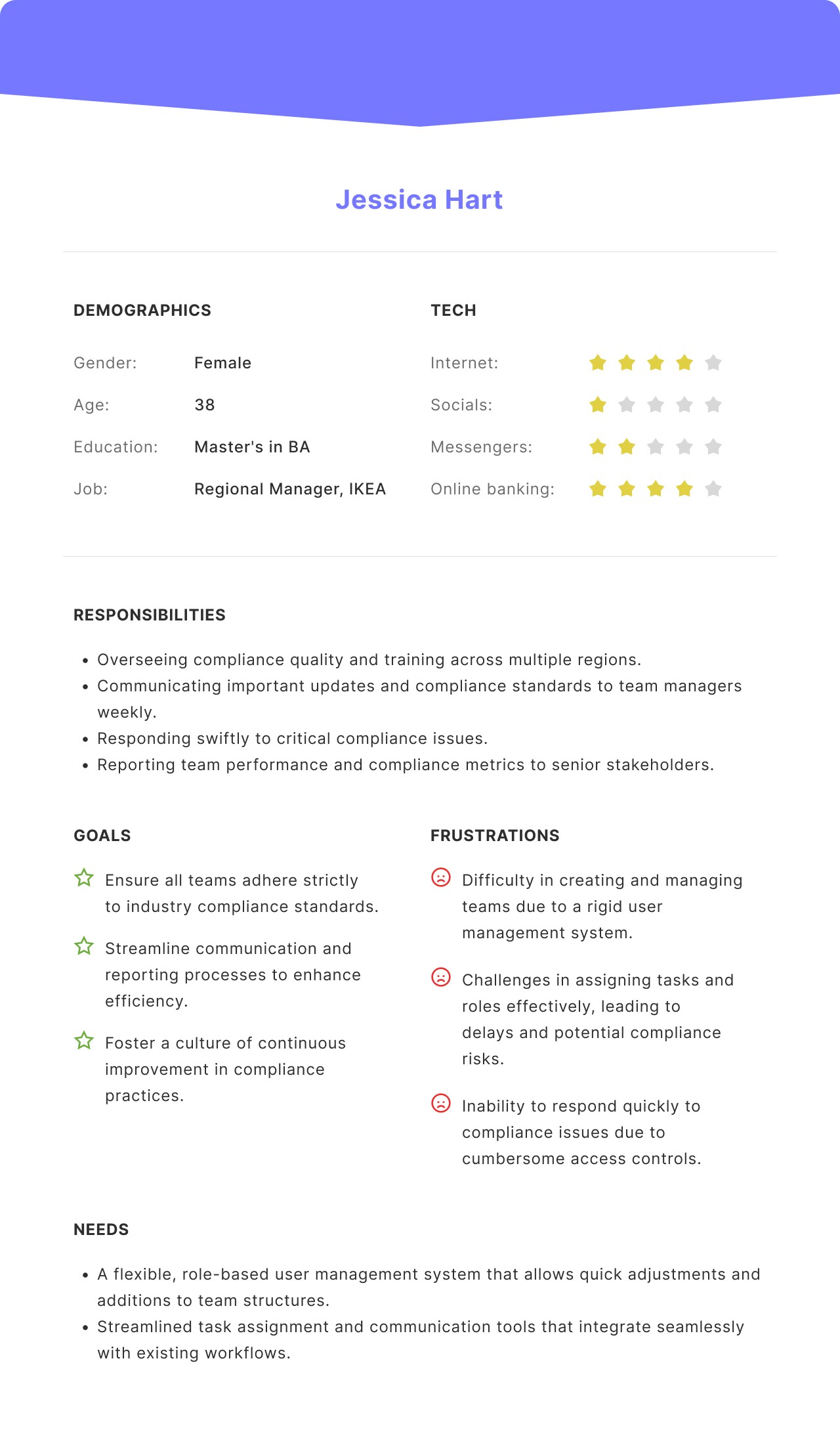
Frontline need an easy way to communicate to leaders
The Solution
Reusable roles layered onto existing infrastructure. Zero new APIs.
Engineering wouldn't invest 2–3 months to rebuild the identity system. The design system didn't yet support large tablet-friendly typography. So instead of proposing a new system, I co-designed a working proof of concept with engineering that grouped existing permissions into reusable Roles without the need of new APIs. The approach was phased: managers first, then frontline users. The redesigned system introduced role-based access control layered onto the existing permissions structure: 1. bulk user upload via CSV and HRMS integration 2. custom role creation for organisations with non-standard structures 3. extended typography scaling for tablet use 4. contributed directly to the shared design system.
By the numbers
More projects